Ever stared at your codebase and wondered why you chose Redis over Memcached? Or why that particular library made it into your dependencies? Yep, same.
The Problem I Was Tired Of
We've all been there. You're onboarding a new developer, or revisiting code from six months ago, and someone asks: "Why did we use this library?" And you're left with... nothing. Maybe a vague commit message. Maybe a Slack thread lost in the digital void. Maybe just a shrug.
The thing is, we make dozens of technical decisions every week. Some are huge (switching databases), others feel small (adding a new dependency). But they all have context, trade-offs, and reasons. And most of that knowledge just... evaporates (or stays deep hidden in the developer's mind).
The "Just Write ADRs" Advice
Look, I know. Architecture Decision Records (ADRs) are great. I love them in theory. But in practice? When I'm deep in flow, about to commit code at 2 AM (like now, 01:35), the last thing I want to do is context-switch to write a markdown file from scratch.
So decisions don't get documented. Context gets lost. And six months later, we're all confused.
What If Documentation Happened Automatically?
That's the core idea behind LDDL (Local Dev Decision Log). What if your git workflow could gently nudge you to document decisions at the exact moment you make them?
Here's how it works:
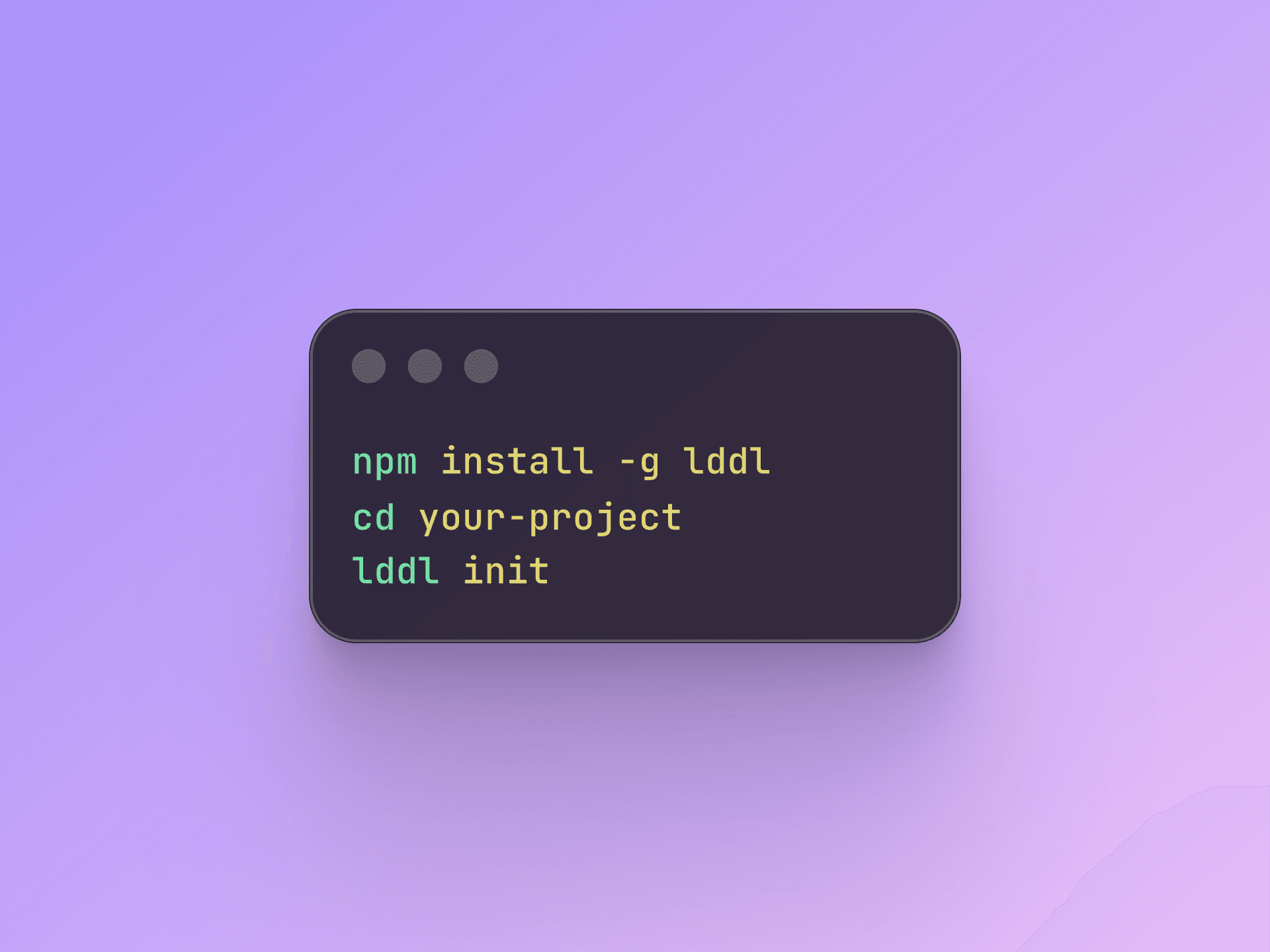
1. Install Once, Forget About It
npm install -g lddl
cd your-project
lddl init
That's it. LDDL installs git hooks into your repository. Not invasive, not complicated. Just there when you need it.
2. Make Changes Like Normal
You add a new dependency. You commit. That's your normal workflow.
npm install express
git add .
git commit -m "Add express"
3. Get Prompted (At The Right Time)
Here's where the thing happens. LDDL detects you added a dependency and asks:
📦 New dependencies detected: express

Would you like to create a decision log for this? (y/N)
Say yes, and you get prompted for context:
Why did you add this dependency? (Context): Need a web framework for REST API
What will you use it for? (Decision): Building the HTTP server
Any trade-offs or impacts? (Consequences): Adds ~500KB to bundle size
And boom. Decision logged. No context switching. No separate file to create. Just natural conversation with your git workflow.
4. Everything Lives In Your Repo
The decision gets saved as a markdown file in .lddl/decisions/:
# Add express dependency

**Date:** 2026-01-04T00:15:00.000Z

## Context

Need a web framework for REST API

## Decision

Building the HTTP server

## Consequences

Adds ~500KB to bundle size
It's version-controlled. It travels with your code. It's searchable. And it's yours.
The Philosophy
LDDL isn't trying to replace proper architectural documentation. It's not trying to force you into a process. It's just catching those small decisions that would otherwise slip through the cracks.
Think of it as a safety net for your team's collective memory.
What I Learned Building This
Git hooks are powerful. They let you hook into the developer's natural workflow without being disruptive. The key is to never block commits – LDDL always lets you skip prompts or ignore them entirely.
Timing is everything. Prompting during prepare-commit-msg means the developer is already in "commit mode." The context is fresh in their mind. They haven't context-switched yet.
Local-first matters. Everything lives in your repository. No external services, no API calls, no vendor lock-in. Just markdown files that work offline, forever.
What's Next
Right now, LDDL detects dependency changes. But there's so much more:
- 🏗️ Infrastructure changes (Dockerfile, CI configs)
- 🏛️ Architecture shifts (new modules, folder structure)
- 🔄 Process updates (new npm scripts, workflows)
- 🤖 AI-powered context suggestions
- 📊 Decision analytics and patterns
The goal isn't to document everything. It's to make documenting the important stuff so frictionless that you actually do it.
The Real Win
A few weeks ago, a teammate asked why we chose a particular library. Instead of saying "I don't remember," I typed:
lddl listAnd there it was. Context, reasoning, trade-offs. All captured three months ago when the decision was fresh.
That's the real win. Not perfect documentation. Just enough context to not feel lost in your own codebase.
LDDL is open source and available on npm.. So give it a try.
Btw, Happy New Year!